Thought Daughter

I saw Traore’s latest decree, and I have some thoughts.
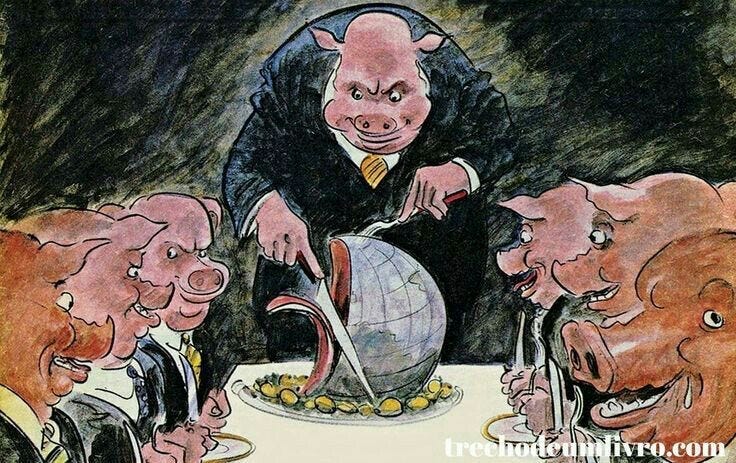
While the ideology of Pan-Africanism; the belief in a unified, single, African identity was a powerful force for decolonization. Evolved to include to total independence from the west, or neocolonialism.
Its implementation by some African leaders baffles me. People like Nkrumah, Mugabe, Traore, and Gaddafi became central figures in governments that were characterized by authoritarianism, violence, or lack of accountability (all three sometimes).
A core criticism I have towards Pan-Africanist leaders is that, they have failed to move beyond the violent and autocratic-esque systems they fought to overthrow. The initial ambition of a united, self-determined Africa often devolved into oppressive “strongman politics.”
These leaders, despite their strong anti colonial rhetoric and ambitious visions for Africa's future, established systems that mirrored the very colonial structures they sought to dismantle.
You can’t tap into idealism without deconstructing how violence conflated with justice and the “Strongman politics” is inherently flawed.
It is the masses of the state that suffer. You can’t aim for consolidation when a central form of socialization throughout Africa is violence, bigotry, and aversion toward questioning.
Conflation of Violence and Justice
The struggle for independence was inherently violent, but the line between revolutionary violence and state sanctioned oppression blurred once these leaders were in power. This led to the suppression of dissent and the use of violence to maintain control even towards civilians. This extends to basic human and private rights, and even a war against academia and press, sometimes.
The continual conflation of violence and personal bias as justice is insidious.
Strongman Politics
“Strongman politics” is also something I’ve seen in democratic states. You ask a Nigerian why he loves Putin, and you’ll get your answer.
This political style concentrates power in the hands of a single, “charismatic” leader. It can appeal to a population weary of foreign interference, and another important factor is, it blooms with the death of academia, and a population plagued by illiteracy and poverty. But it is inherently flawed because it lacks checks and balances. The masses often suffer when a leader's personal ambition or paranoia overrides the needs of the state; it manifests as corruption, economic mismanagement, and human rights abuses (we’re watching this happen in real time with Traore).
Intolerance for Criticism
Another crucial failure of these regimes was/is their intolerance for internal criticism and debate. A healthy, progressive society requires open dialogue, and the ability to question leadership. When a central form of socialization becomes violence and bigotry toward opponents, new perspectives, or curiosities, it stifles innovation, discourages political participation, and ultimately hinders national development.
Africa is so deeply uniformed when it comes to terrible leaders, and even the political awareness and opinions when it comes to the masses. Even our “democracy” fits deeply with what Professor Poe said: “Democracy is dictatorship of the winner.”
To make any change at all, we must start with the minuscule cell of our society: family.
We must champion a radical re-socialization, banishing the system of championing exploitation, equating bigotry as advice or wisdom, and conflating violence and dehumanization as the first step of correction.
To see change, allow curiosity thrive, center healthy principles, and center humanism in every institution.
You can’t take a pig out of a sty and expect them to be horses.
These leaders were socialized in that format; they’ll champion what they’ve known all their lives.
This is so apt, especially the bit about starting with the smallest unit of society, the family. An average Nigerian is all/some shades of terrible, but we magically want our leaders to be saints.